
The Default Is Competition
Our instinct, especially in fields that attract venture capital and national pride, is to hoard. To move fast, keep secrets, build moats. It's a logical strategy if your goal is dominance. But fusion reveals something uncomfortable: some problems cannot be dominated into submission. They require you to bet that openness will get you further than secrecy.
For seventy years, fusion scientists have had to make that bet. Søren notes that "people collaborated, the fusion scientists collaborate" across the Iron Curtain. In the 1960s, British scientists travelled to Moscow to verify Soviet tokamak claims not as spies, but as scientists. They shared findings. They built on each other's work. This wasn't heroic idealism. It was pragmatism. The problem was too hard to solve alone.
Yet in most sectors, we've chosen the opposite. Tech companies patent aggressively. Biotech firms race to proprietary solutions. Governments treat advanced materials as national secrets. We've normalised the assumption that competition accelerates everything. But fusion suggests otherwise: for some problems, competition is the constraint.
What Declassification Actually Meant
The 1958 decision was not naive. Scientists retained the right to publish, verify, and build on each other's work. But classified research stopped. Duplicative secret projects ended. The Soviet tokamak design wasn't hidden from the West. British scientists could see it, test it, learn from it. This asymmetric openness accelerated progress not because everyone was nicer, but because it eliminated the waste of parallel secret efforts.
The proof came at the negotiating table. When Reagan and Gorbachev met in Geneva in 1985, "one of the things they could agree on was to work on a collaborative effort to develop fusion energy for the benefit of mankind." Not for Soviet benefit. Not for American dominance. For mankind. They launched ITER, the International Thermonuclear Experimental Reactor, which is being built now. It required the superpowers to override their competitive instincts on one of the most technologically ambitious projects ever attempted.
That's not a footnote in fusion's story. That's the central fact.
But What About Speed?
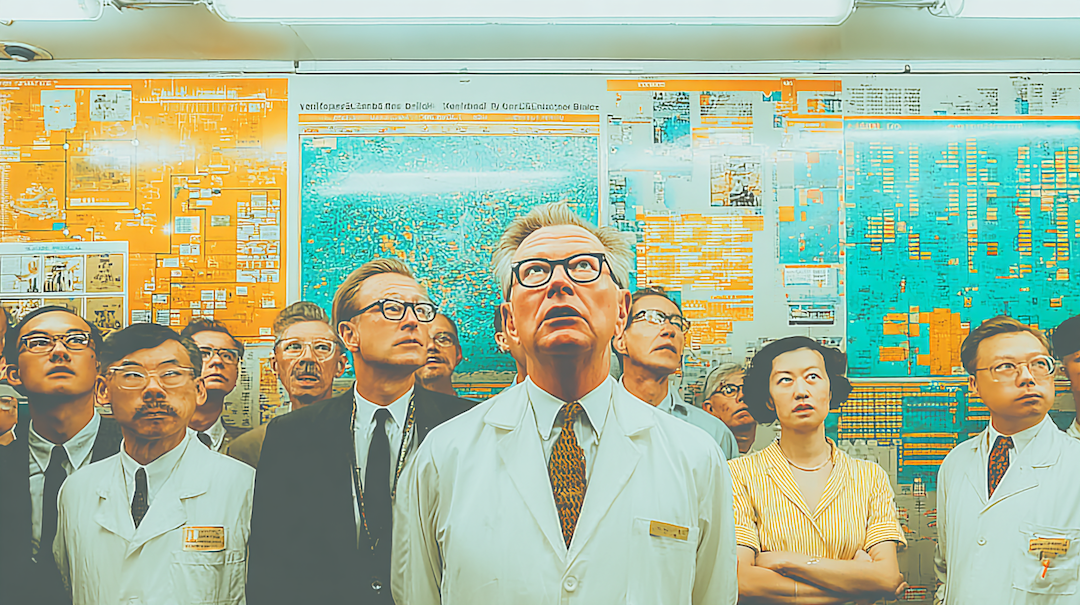
The immediate objection is obvious: wouldn't private competition move faster than international committees? Søren addresses this directly. When asked about timelines, he's careful. "If you ask the private sector, it's maybe even in a decade." But he also says: "No, I think the first power plant will likely be sooner." He's not dismissing the private sector. He's noting that progress requires both approaches, and that the collaborative foundation makes individual efforts possible.
The private fusion startups of the last decade have not built fusion from scratch. They've built on seventy years of declassified research, shared findings, and incremental progress made by international collaboration. Commonwealth Fusion Systems, Helion, TAE Technologies, they inherit a commons of knowledge. Competition exists within that commons, not outside it. And that commons exists because scientists chose to collaborate.
This Matters Beyond Fusion
Here's where it gets uncomfortable. We're now facing problems at fusion's scale: artificial intelligence, climate change, pandemic preparedness, supply chain resilience. These are civilisation-scale challenges. And our default posture remains competitive hoarding.
We classify AI research as trade secrets. We patent climate solutions. We treat pandemic countermeasures as national assets. We tell ourselves this is pragmatism. But fusion offers a different model: what if the fastest path to solving these problems isn't protecting our advantage, but extending our collaboration?
This isn't about surrendering competition. It's about recognising that some problems have a threshold. Below that threshold, competition works. Above it, you need both. The competition that happens within a shared foundation of open research moves faster than the competition that spends half its energy protecting secrets.
Søren puts it simply when he reflects on fusion's history: "Since it had four billion years to practice, in that perspective, I think it's okay that, about 100 years in, we're almost ready to make a copy." There's confidence there. Not arrogance, but the confidence of a scientist standing on seventy years of openly shared work.
The Question Isn't Physics
The next fusion power plant might come from Commonwealth Fusion or from ITER or from a project we haven't heard of yet. But it will only be possible because of declassification. Because somewhere along the way, fusion scientists decided that the problem was larger than any single competitor.
We're now facing problems that are just as large. The question is whether we'll learn from fusion's example or keep pretending that competition alone can solve them. Because on problems of this scale, speed and dominance aren't the same thing. And openness isn't weakness. It's the infrastructure that makes genuine progress possible.