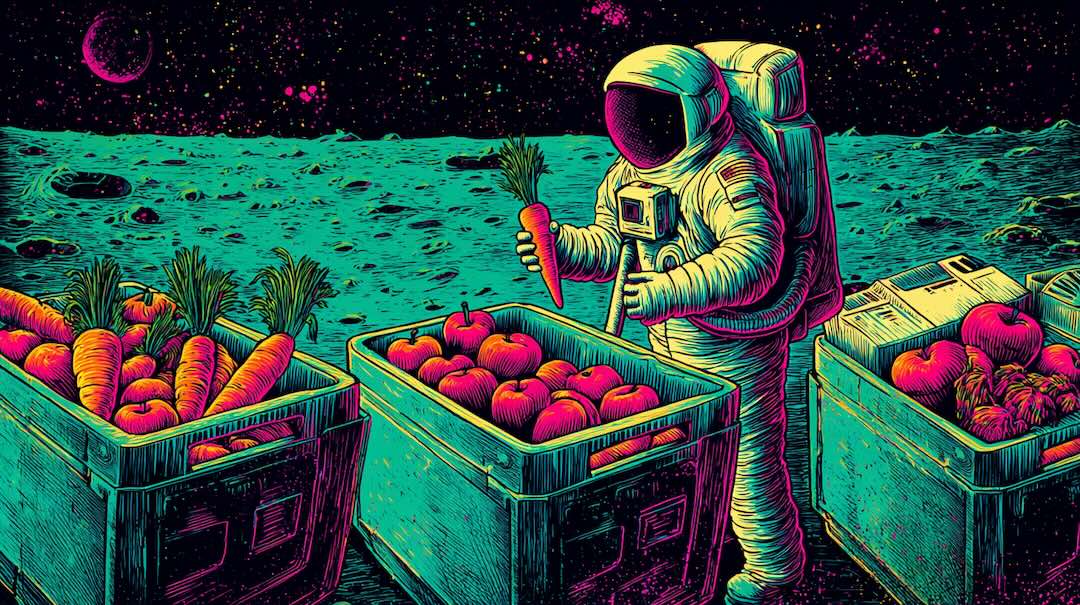
The System That Lost the Plot
Agriculture is an optimization story. For ten thousand years, humans have been refining how to extract calories from land. The industrial revolution made it a science. We bred crops for yield. We bred animals for production. We engineered fertilizers, pesticides, and monocultures. And it worked. The data prove it works. A modern dairy cow produces milk at rates that would astonish a farmer from 1900. Modern pigs are, as Jensen puts it, animals "we've really domesticated 10,000 years ago. Now we've evolved them ourselves, more or less, genetically modified them to be dairy machines or be meat-producing pork machines."
But here is where the story breaks. The metric we chose to optimize was not human nutrition. It was animal feed production efficiency. Once you make that choice, once you build systems and infrastructure and economies around that target, the system begins to defend itself. It becomes rational to grow corn for cows rather than for people. It becomes rational to waste a third of production because the system is still profitable at two-thirds utilization. It becomes rational to continue, to optimize further, to squeeze more yield from the same broken premise.
Jensen sees this clearly. What we need, he says, is "not just a linear innovation. It's also completely new ways of working, completely new ways of producing food and feed." This is the language of someone who understands that you cannot fix an optimization trap by optimizing harder within it.

The Optimization Trap Is Not Unique to Agriculture
This pattern shows up everywhere. Technology companies optimize for engagement metrics and lose sight of whether engagement is good. Education systems optimize for test scores and lose the purpose of education. Supply chains optimize for cost and lose resilience. Financial systems optimize for quarterly returns and lose long-term stability. In each case, the system becomes extraordinarily good at what it measures. In each case, the system begins to serve the metric rather than the purpose the metric was supposed to represent.
The trap is not stupidity. It is the opposite. It is the result of disciplined, rational optimization. You set a clear target. You build infrastructure around it. You attract talent and capital. You refine and improve. The system becomes locked in because reversing course is expensive, because people's careers are built on it, because the math still works if you just push harder.
Why Transformation Takes Time We Don't Have
Jensen mentions that wind power took decades to become profitable. Then he says something crucial: "It took wind 20 years, maybe 25, 30 years to become a profitable business on its own. You need to have the same perspective, only the fact that we have to do it in 10 years or 15 years."
This is not a technical problem. This is a problem of institutional will and speed. Regenerative agriculture is not a marginal improvement. It is a different system built on different assumptions. It takes time to prove the economics. It takes time to build supply chains. It takes time for the culture to shift from "maximize output" to "restore soil, reduce waste, feed people."
But we do not have 30 years. The climate is changing. The population is growing. The waste is unsustainable. We need the transformation to happen faster than transformations typically happen.
The Conviction to Change Course
The agricultural revolution was a triumph. We learned to grow more food on less land. We built the systems that allow eight billion people to eat. This is real. This matters. But optimization, no matter how brilliant, is not the same as purpose. And when the system you perfected stops serving its purpose, continuing to perfect it is not progress.
The next revolution will come from people willing to see that we got the metric wrong. Not wrong in a moral sense. Wrong in a practical sense. We optimized for the wrong target, and now the cost of that choice is showing up in soil degradation, biodiversity loss, food waste, and a food system that does not actually feed people well. The work now is not to optimize harder. It is to take off the blinders and build something that actually serves what it is supposed to serve.