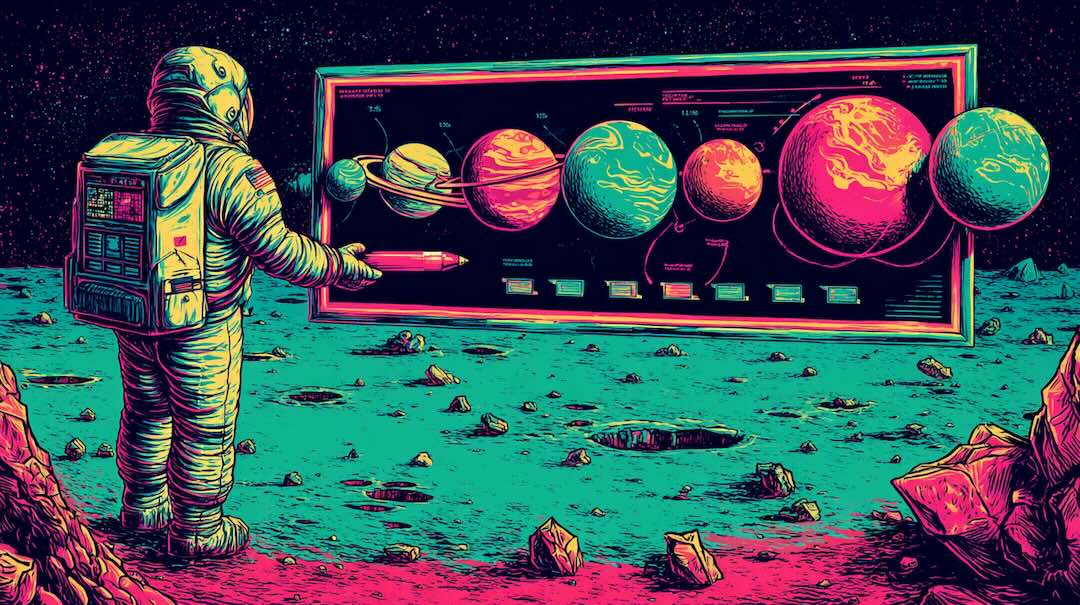
The Boundary Problem Is Not a Detail
Mads Fredslund Andersen, telescope and satellite manager at Aarhus University, is direct about the definition difficulty: "It's a fairly vague way of defining where it is." He describes two definitions in common use, gravitational influence and the edge of the solar wind, and explains that neither gives a fixed, stable boundary. The Voyager probes measured the radiation boundary at different distances from the Sun. It moves. It depends on the solar cycle.
The standard poster has no mechanism for conveying this. A diagram needs edges. Textbook margins need definitions. So a vague, contested, physically shifting boundary gets rendered as a clean line, and students absorb the implication that the solar system is a precisely delineated object.
The consequence is that when something is discovered beyond Neptune, whether a new dwarf planet, a distant Kuiper Belt object, or a candidate for the hypothetical Planet Nine, it seems surprising, almost anomalous. It should not be surprising. Beyond Neptune is where the solar system continues, and beyond the Oort Cloud is where it gradually stops. The middle is genuinely uncertain. Teaching the poster as if the edge is known produces a generation of adults who are surprised by routine discoveries.
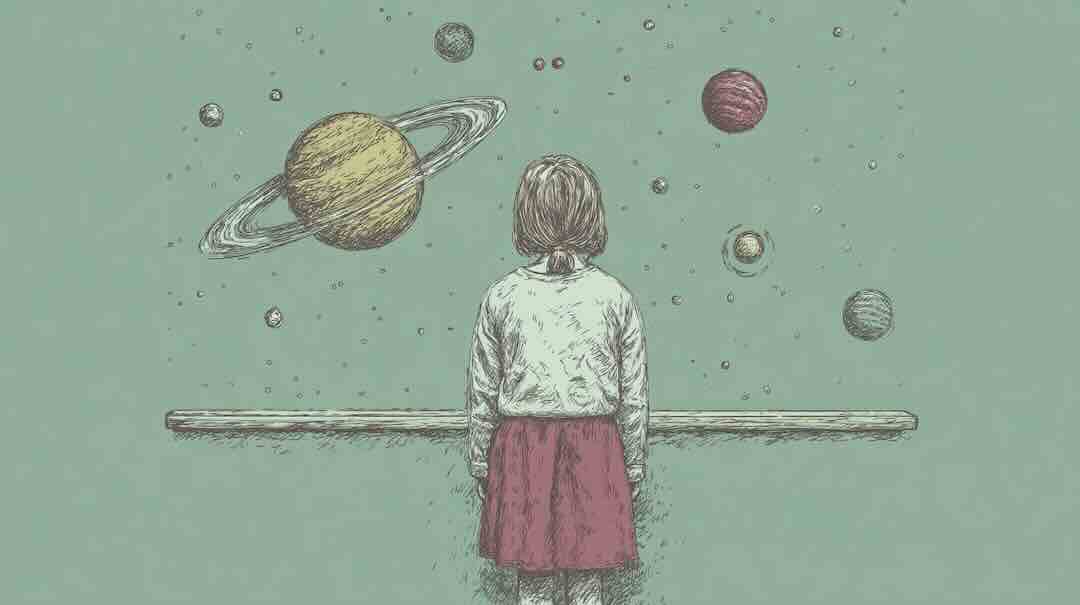
The 99.9% Problem
The poster also has an implicit mass distribution problem. It shows eight objects of varying sizes around a central Sun. The visual encoding, however inadvertently, suggests that the system consists of multiple significant bodies in roughly comparable categories.
The reality is that 99.9% of all the material in the solar system is the Sun. Everything else is 0.1%. All eight planets, all their moons, the entire asteroid belt, the Kuiper Belt, every comet that has ever been observed: 0.1%. The Sun is not the biggest object in the solar system. The Sun is the solar system. Everything else is debris from its formation that did not get swept up.
This distinction matters when thinking about what the solar system is. It is not a community of objects orbiting a central star. It is a star, with a thin scattering of left-over material in orbit around it. The poster's visual grammar suggests the former and conceals the latter.
What the Misleading Poster Gets Right
The poster is not entirely wrong to focus on the eight planets. They are, as Mads notes, "the most interesting part, it's what's closest and we haven't discovered much further out either." For practical purposes, including life, climate, and the exploration missions humans are likely to conduct in the near future, the eight planets and their moons are the relevant part of the solar system.
The poster is also a product of what was known when it was drawn. The Oort Cloud is inferred but not directly observed. Kuiper Belt objects were only confirmed in 1992. The systematic discovery of exoplanets that revealed how ordinary the solar system is only began in 1995. A poster made in 1985 could not have shown what was not yet known.
But the poster has not been significantly updated, and the picture it creates in students' minds persists. People who learned planetary science in 1985 are now the adults making decisions about science funding, space policy, and education curriculum. The outdated picture is not inert.
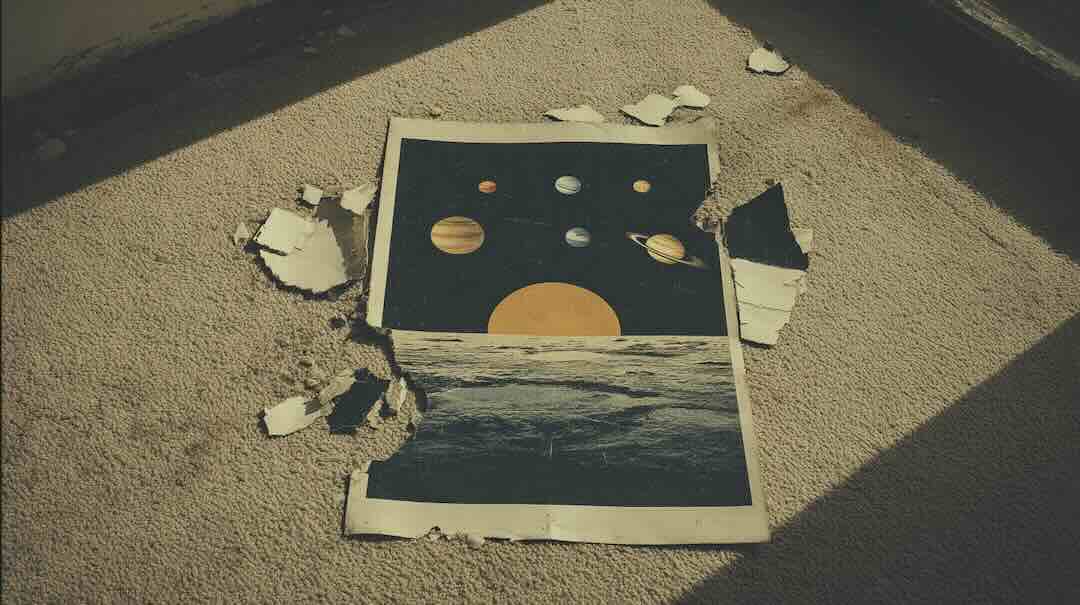
Why the Edge Matters for Exploration
The question of where the solar system ends is not purely philosophical. It has direct implications for what exploration means. If the solar system ends at Neptune, exploring beyond Neptune is leaving the solar system, going somewhere else. If the solar system's gravitational influence extends halfway to Proxima Centauri, then the Oort Cloud is part of our neighbourhood, and the objects in it are as much part of the solar system as Mars.
That reframing changes what is imaginable. Comets that travel from the Oort Cloud into the inner solar system are bringing material from the furthest reaches of our own neighbourhood. Studying them is not an exotic enterprise, it is local geology. The ice moons of Jupiter and Saturn, which Mads describes as among the most exciting targets for future missions, are sitting in the middle of the same system that includes Earth.
"I hope in my lifetime that we will have man missions to Mars," he says, and then extends that hope to the ice moons. Europa. Enceladus. Liquid water under ice, kept warm by tidal forces from a gas giant. Possibly the most realistic place in the solar system to look for life that did not originate on Earth.
None of that is on the poster. The poster ends at Neptune. The solar system does not.